
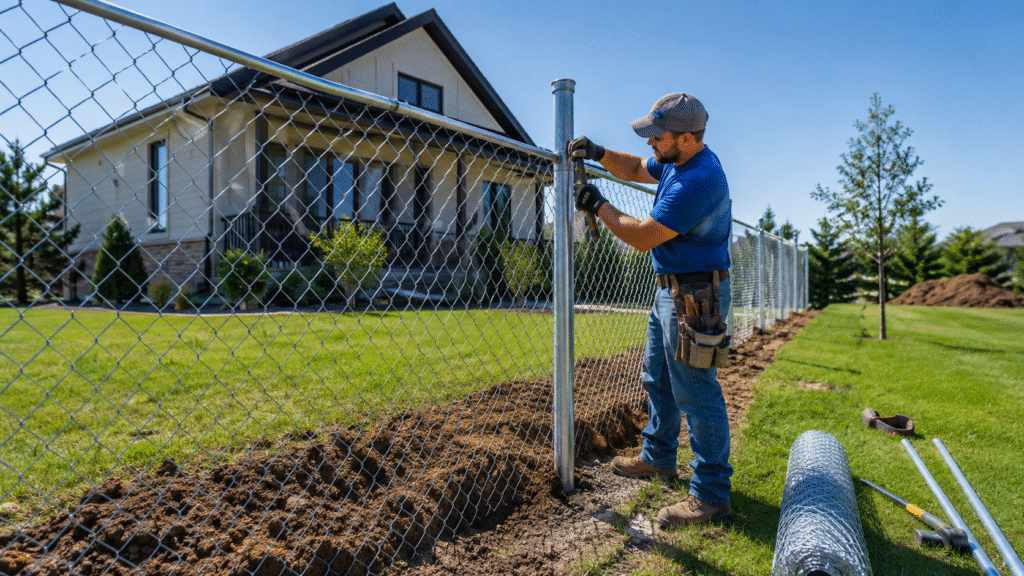
Ask any contractor which fence gets requested most often for backyards, warehouses, or school playgrounds, and chain link comes up again and again. There’s a reason for that. It’s affordable, it holds up, and it doesn’t demand much once it’s in the ground. If you’ve been comparing fencing options and keep circling back to chain link, you’re not alone. Understanding how installation actually works will save you money, whether you hire someone or do it yourself.
This guide covers the whole picture: fence types, materials, the actual step-by-step process, mistakes people make (a lot of them), what drives cost up or down, and how to keep the fence looking good years after it goes up.
What Is the Installation of Chain Link Fence?
At its core, installing a chain link fence means setting posts in the ground, connecting them with rails, and stretching a woven steel mesh — the “fabric,” as installers call it across the frame. The mesh gets locked in place using tension bands, ties, and a wire running along the bottom edge.
What makes chain link different from wood or vinyl privacy fencing is that it doesn’t block anything. You get a real boundary without losing sunlight or sightlines, which matters more than people expect once the fence is actually up.
Here’s the thing most people don’t realize until it’s too late: the quality of a chain link fence has almost nothing to do with the mesh itself and everything to do with how it’s installed. Posts set too shallow, or mesh that isn’t pulled tight enough, will turn a solid fence into a saggy, leaning mess within a year or two. Get the installation right, though, and you’re looking at a fence that outlasts most other options on the market.
Types of Chain Link Fences
Before any digging happens, it helps to know what you’re actually buying. The coating and finish on the wire changes both how the fence looks and how long it’ll last outdoors.
Galvanized Chain Link Fence
This is the classic, silver-toned chain link most people picture. Steel wire coated in zinc to resist rust — nothing fancy, just reliable. It’s the cheapest option by a good margin and works fine for backyards, storage areas, or anywhere looks aren’t the priority.
Vinyl-Coated Chain Link Fence
Take that same galvanized core and wrap it in PVC, and you get a fence that looks noticeably more finished and holds up a bit better against the elements. Green and black are the usual color choices. A lot of homeowners go this route specifically because they want the security of chain link without it looking quite so industrial.
Black Chain Link Fence
Technically, this is just a black vinyl-coated fence, but it’s common enough to talk about on its own. Schools, parks, and sports complexes lean toward black chain link constantly — it fades into the background instead of standing out, and honestly, it photographs better too.
Benefits of Installing a Chain Link Fence
People keep choosing chain link for the same handful of reasons, decade after decade:
- It’s noticeably cheaper per foot than wood, vinyl privacy panels, or ornamental iron
- Almost zero maintenance no staining, no sealing, none of the upkeep wood demands
- It lasts a properly installed fence can easily go 15-20 years without major issues
- Goes up fast, especially compared to masonry or wood, which take real time
- Doesn’t block light or airflow; you still get privacy-adjacent security without the shadowy backyard feel
- Recyclable steel gets a second life once the fence is finally replaced
For anyone weighing cost against how long something needs to last, chain link is tough to beat.
Common Applications of Chain Link Fencing
Part of why chain link installation stays in constant demand is how many different situations it fits into.
Residential Properties
Backyards, dog runs, pool enclosures — chain link shows up everywhere homeowners need a secure line without the price tag of a privacy fence.
Commercial Buildings
Businesses lean on it for parking lot boundaries, storage yard perimeters, and general site security where a visible but not fortress-like barrier does the job.
Industrial Facilities
Warehouses and equipment yards use chain link constantly, often with barbed wire or privacy slats layered on top for extra security on large perimeters.
Schools & Sports Fields
Playgrounds, baseball backstops, and tennis courts: chain link contains balls and equipment while still letting parents actually see what’s happening on the other side.
Farms & Agricultural Land
Out on farmland, chain link keeps livestock contained and wildlife out of crop fields, and it shrugs off weather exposure far better than wood does over the years.
Planning Before Chain Link Fence Installation
Skipping the planning stage is how projects turn into headaches. Start with your property survey to confirm exactly where your boundary line sits, because a fence installed even a foot over can turn into a genuine dispute with a neighbor. If you’re in an HOA, check their rules too; a lot of associations have specific requirements on height and even color.
Permits matter more than people assume. Plenty of municipalities require one, particularly for fences over a certain height, and skipping this step can mean fines or being forced to tear it back down later.
Before you touch a shovel, call your local utility locating service (811 in the US) to get underground lines marked. Hitting a gas or electrical line isn’t just an expensive mistake — it’s a dangerous one. Once that’s handled, measure your full perimeter, settle on a height, and figure out where gates need to go based on how you’ll actually use the space.
Materials and Tools Required
Here’s what you’ll need on hand before starting:
- Line posts (the regular intermediate posts along the run)
- Terminal posts (heavier-duty, for corners, ends, and gates)
- Top rail to connect the posts
- Chain link mesh, sized by height and gauge
- Tension wire, tension bands, and brace bands
- Post caps and rail ends
- Concrete mix for anchoring posts
- A post hole digger or power auger
- A fence stretcher (sometimes called a come-along)
- Level, tape measure, pliers, work gloves
Most DIY fences that end up sagging within a year didn’t skimp on the mesh — they skimped on the concrete or skipped the stretcher entirely.
Step-by-Step Chain Link Fence Installation Process
This is roughly how a professional crew tackles it, and it’s worth following in order rather than skipping ahead:
- Mark the fence line. Stakes and string, spacing line posts about 8-10 feet apart.
- Set terminal posts in concrete. These go at corners, ends, and gate openings; they take the most stress, so don’t rush the concrete cure time.
- Install line posts. Evenly spaced, ideally also set in concrete for long-term stability.
- Attach the top rail. This ties all the posts together and adds real rigidity to the whole structure.
- Unroll the mesh and attach it to a terminal post using tension bands.
- Stretch the mesh with a fence stretcher. This is the step people most often cut corners on, and it’s the single biggest factor in whether your fence sags later.
- Secure the mesh to line posts with ties, spaced evenly, and to rails/posts with tension bands.
- Run tension wire along the bottom edge to keep the mesh from lifting or gapping near the ground.
- Hang the gates and check that they swing freely without dragging.
- Walk the whole line and check post stability, tension, and alignment before calling it finished.
Common Installation Mistakes to Avoid
Even people with some DIY experience trip up on the same handful of things:
- Skipping the utility check before digging — risky, and in a lot of places, not legal either
- Shallow post holes or thin footings, which is the number one reason fences start leaning
- Under-tensioned mesh, which sags almost immediately and just looks unfinished
- Ignoring permits or not confirming the property line first
- Spacing posts too far apart, which weakens the whole structure over time
Every one of these is avoidable with a bit of patience up front.
Factors That Affect Chain Link Fence Installation Cost
A few things push the price up or down. Height is the obvious one — taller means more material and sturdier posts. The gauge and coating type matter too; vinyl-coated and black chain link both run pricier than plain galvanized. Total footage plays in as well, and longer runs sometimes get a better per-foot rate from contractors.
Terrain can add cost fast if the ground is rocky or sloped and needs extra excavation. Gates, especially large drive-through ones, add to both material and labor. Labor rates themselves shift a lot by region, so it’s worth getting a few local quotes rather than assuming one number applies everywhere. And if there’s an old fence to tear out first, that’s its own line item.
Chain Link Fence vs Wood Fence
Cost-wise, chain link almost always wins: cheaper materials, cheaper labor. Wood gives you actual privacy since it’s solid, while chain link stays open and see-through no matter what. Maintenance is where the gap really shows: wood needs staining or sealing regularly to fend off rot, while chain link needs basically nothing.
Durability tends to favor chain link too, especially in wetter climates where wood is prone to rot, warping, and insect damage. If privacy is the priority, wood makes sense. If you want something low-maintenance that just keeps working, chain link is the more practical pick.
Chain Link Fence vs PVC Fence
PVC fencing looks more polished — cleaner lines, and it comes in styles that offer real privacy, unlike chain link’s open weave. Cost still tips toward chain link, which is generally cheaper to buy and install.
Weather resistance is close between the two, though PVC can get brittle in extreme cold over the years, while galvanized steel tends to hold up more consistently across different climates. For pure security value, chain link usually wins on return for the money. For curb appeal and privacy, PVC has the edge.
Maintenance Tips After Installation
Chain link doesn’t ask for much, but a little attention goes a long way. Clear leaves and debris away from the base regularly; trapped moisture is what speeds up rust in weak spots. Check periodically for small rust patches, especially near ground level, and treat them early before they spread further.
If a section starts sagging, re-tension it with a stretcher rather than letting it get worse. Gate hardware hinges, latches, and rollers benefit from the occasional bit of lubricant to keep things moving smoothly. And after any major storm, it’s worth walking the fence line to check for leaning posts or damage that needs quick attention.
How Long Does a Chain Link Fence Last?
A galvanized chain link fence, installed properly, typically runs 15 to 20 years. Vinyl-coated versions often go longer, since that PVC layer gives extra protection against rust and general weather wear.
Climate plays a real role here — coastal areas with salt in the air tend to see faster corrosion than inland regions do. Fences that get even minimal regular attention almost always outlast the ones that are left completely alone after installation day.
Signs You Need Professional Chain Link Fence Installation
Chain link is more DIY-friendly than most fence types, but there are situations where calling a pro makes more sense. Sloped or uneven ground often needs techniques most DIYers haven’t dealt with before. Long commercial runs involve more material handling than a weekend project can reasonably absorb. Areas with strict permit and inspection rules benefit from someone who already knows the local code inside out. Automated or heavy-duty gates usually need professional installation for safety reasons alone. And honestly, if you don’t already own a power auger or a fence stretcher, renting that gear for a one-time job can end up costing close to what a contractor would charge anyway.
How to Choose the Right Chain Link Fence Installation Company
Not every fencing company delivers the same level of work, so a bit of vetting goes a long way. Confirm they’re licensed and insured first; that protects you if something goes sideways during the job. Read recent reviews, not just the ones on their homepage. Ask for an itemized quote instead of a vague ballpark number, so you know exactly what’s covered. Check what warranty they offer on both materials and labor, since a company confident in their work usually stands behind it. And don’t be afraid to ask exactly what gauge and coating they’re planning to use — some lower quotes come from cutting corners on material quality, not efficiency.
Frequently Asked Questions (FAQs)
1. How much does it cost to install a chain link fence?
It varies by region, height, and material choice, but chain link is generally one of the cheaper fencing options per linear foot compared to wood or vinyl privacy fencing.
2. Can I install a chain link fence myself?
Plenty of homeowners do, especially for smaller residential jobs. Larger properties, tricky terrain, or heavy permit requirements are usually where it makes sense to bring in help.
3. How deep should chain link fence posts be set?
A common rule of thumb is roughly one-third of the post’s above-ground height, anchored in concrete.
4. What is the standard height for a chain link fence?
Residential fences usually run 4 to 6 feet. Commercial and industrial setups often go 6 to 8 feet or taller.
5. How long does chain link fence installation take?
For a typical backyard, one to three days is normal, depending on how long the perimeter is and what the terrain looks like.
6. Do I need a permit to install a chain link fence?
Often, yes, especially above a certain height. Check with your local building department before starting.
7. What gauge chain link fence is best?
Lower numbers mean thicker wire. 11-gauge is standard for most homes; 9-gauge is sturdier and better suited to higher-security needs.
8. How far apart should chain link fence posts be?
Around 8 to 10 feet is typical, though it can shift slightly depending on height and ground conditions.
9. Is chain link fence cheaper than wood?
Yes, both in upfront material cost and in what you’ll spend maintaining it over time.
10. How do you keep a chain link fence from sagging?
Proper tensioning during installation is the biggest factor. A fence stretcher does the job right, and regular maintenance checks catch loose sections before they get worse.
Conclusion
Chain link fencing earns its reputation the hard way — it’s affordable, it lasts, and it just doesn’t ask much of you once it’s up. Whether you go with galvanized, vinyl-coated, or black chain link, the difference between a fence that holds up for two decades and one that sags within a year almost always comes down to installation quality, not the materials themselves.
If your project involves tricky terrain, a long commercial perimeter, or a permit process you’d rather not navigate alone, bringing in an experienced installer is usually worth it. Either way, get a few quotes, ask the right questions, and you’ll end up with a fence built to actually last.