
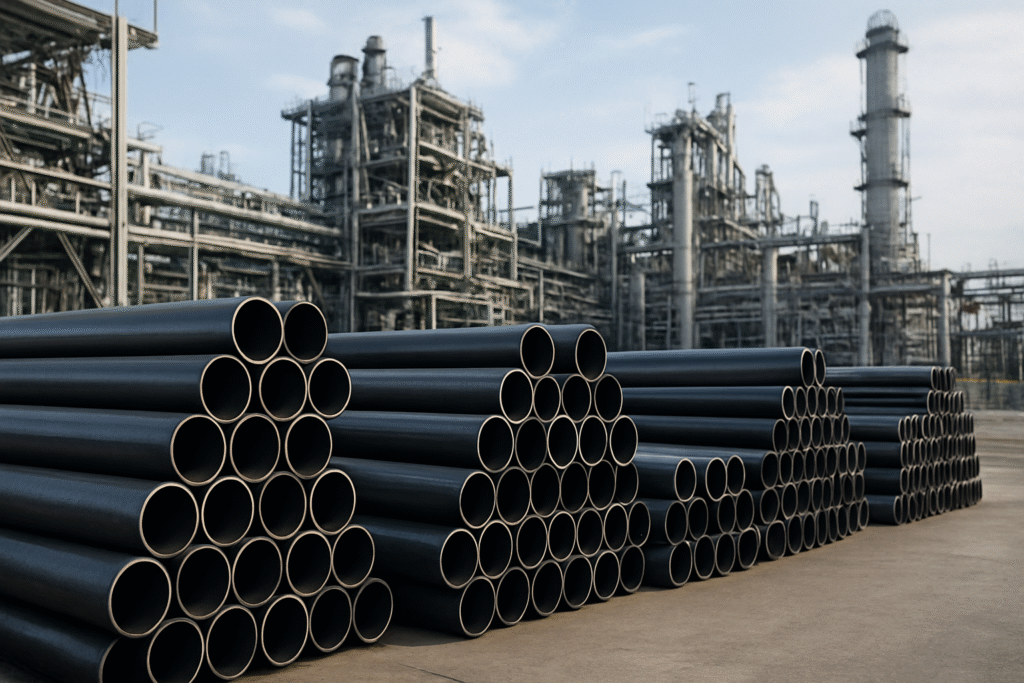
A carbon steel pipe is very important to the infrastructure of modern industry. From transporting oil and gas to supporting construction frameworks, steel pipes are widely trusted for their strength, durability, and cost efficiency. Due to increasing industrialization and infrastructure development, the demand for carbon steel pipe continues to grow across global markets.
Industries prefer carbon steel piping systems because they offer reliable performance under high pressure and temperature conditions. They are still less expensive than other alloy pipes, though. Carbon steel pipe is the best option for projects of all sizes because it is strong and inexpensive.
This article gives a full and detailed overview of carbon steel pipe, including what it’s made of, the different types, how it’s made, where it’s used, its pros and cons, and what the future demand will be.
What kind of steel is a pipe made of?
This is a pipe manufactured primarily from steel and carbon. The amount of carbon in the pipe usually decides how strong and hard it is. In most cases, the amount of carbon in carbon steel pipes varies from low to high, depending on what they are needed for.
Chromium is not needed for carbon steel to be corrosion-resistant, unlike stainless steel. Its main benefit, on the other hand, is its strength and ability to hold weight. Because of this, carbon steel pipe is widely used in pressure systems, structural applications, and fluid transportation.
Composition and Material Traits
The main components of steel pipe include iron and carbon, along with small amounts of manganese, silicon, sulfur, and phosphorus. The carbon level directly impacts the pipe’s properties. Lower carbon content improves ductility and weldability, while higher carbon content increases hardness and tensile strength.
Due to this balanced composition, steel pipes offer excellent resistance to mechanical stress. They can handle tough work environments if they are properly coated or treated.
Types of Carbon Steel Pipe
Carbon steel pipes are generally classified based on their manufacturing process. Each type meets a different need in the industrial world.
Seamless Pipe Made of Carbon Steel
Seamless carbon steel pipe is produced without a welded seam. This type is manufactured by piercing a solid billet and rolling it into a hollow tube. The pipe is strong all the way through because there is no seam.
Seamless carbon steel pipes are commonly used in high-pressure and high-temperature environments such as oil refineries, power plants, and petrochemical industries. Because they can handle very bad situations, they are very reliable.
Pipe made of welded carbon steel
To make welded carbon steel pipe, steel plates or strips are rolled up and the edges are welded together. Welded pipes may not be able to handle as much pressure as seamless pipes, but they are cheaper and easier to find.
People often use these pipes for gas distribution, water pipelines, and building things. With proper welding and inspection, welded carbon steel pipes perform effectively in many industrial settings.
Carbon Steel Pipe Grades That Are Common
Different industries require specific grades of carbon steel pipe to meet safety and performance standards. Some widely used grades include ASTM A53, ASTM A106, ASTM A333, and API 5L.
ASTM A53 carbon steel pipe is often used for low to medium pressure applications and structural purposes. ASTM A106 is suitable for high-temperature services and is commonly found in boilers and heat exchangers. API 5L grades are mostly used in oil and gas transmission pipelines, while ASTM A333 is made for places with low temperatures.
Selecting the correct grade ensures long-term performance and compliance with industry regulations.
How to Make Carbon Steel Pipe
There are several controlled steps in the process of making carbon steel pipe to make sure it is strong and lasts. It begins with the selection of high-quality raw materials. The steel is heated and shaped into the desired pipe form through seamless or welded methods.
After shaping, the pipe undergoes heat treatment to improve its mechanical properties. This step enhances strength and reduces internal stress. The pipe is then sized, straightened, and tested for defects. Depending on how the surface will be used, final treatments or coatings are added.
Quality control checks are done at every step to make sure that the carbon steel pipe meets international standards.
Uses for Carbon Steel Pipe
Because they are strong and can be used in many different ways, carbon steel pipes are used in many different fields. In the oil and gas sector, they are used to transport crude oil, natural gas, and refined products over long distances. Their ability to handle high pressure makes them ideal for this purpose.
Carbon steel pipes carry steam and hot fluids at high temperatures in power plants. These pipes are used by construction companies to support structures, make piles, and build frameworks. Carbon steel pipes are used to move water efficiently in water supply networks, especially in industrial areas.
Chemical industries also use carbon steel piping systems to move different fluids in a controlled way. If they have the right coatings, these pipes can work safely in tough conditions.
Benefits of Carbon Steel Pipe
One of the main advantages of carbon steel pipe is its high strength. It can withstand heavy loads, pressure, and temperature variations without losing performance. This strength contributes to the safety and reliability of industrial systems.
Another great thing about it is that it’s cheap. For big projects, carbon steel pipes are better than stainless steel pipes because they cost less. They are also easy to make, cut, and weld, which cuts down on the time and money needed for installation.
When cared for properly, carbon steel pipes last a long time. Their availability in various sizes and thicknesses makes them adaptable to different industrial requirements.
Limitations of Carbon Steel Pipe
Despite its many advantages, carbon steel pipe has some limitations. It is more prone to corrosion when exposed to moisture or aggressive environments. Without protective coatings, rust can develop over time.
But modern coating methods like galvanisation, epoxy coating, and polyethylene layers make things much more resistant to rust. With proper maintenance, the limitations of this can be effectively managed.
Carbon Steel Pipe vs Other Pipe Materials
When compared to stainless steel, carbon steel pipe is more economical and offers higher strength for structural applications. However, stainless steel provides better corrosion resistance in highly corrosive environments.
Plastic pipes are lightweight and corrosion-resistant, but they cannot match the strength and temperature resistance of carbon steel pipes. This comparison shows why carbon steel is still the best choice for heavy-duty industrial use.
Ways to coat and protect
These are often coated with protective layers to make them last longer. Some common coatings are black, galvanised, epoxy, and multi-layer polyethylene systems. These coatings protect the pipe from corrosion, chemical exposure, and environmental damage.
Choosing the right coating depends on the operating environment and the type of fluid being transported.
Things to keep in mind when putting in and taking care of
For a this one we work well for a long time, it must be installed correctly. Following industry standards for welding and alignment keeps things from breaking down in the future. Regular checks help find damage or corrosion before it gets worse.
Carbon steel piping systems last a lot longer when they are regularly maintained and have protective coatings on them. This proactive approach cuts down on downtime and repair costs.
Market Demand and Future Outlook
The need for carbon pipes around the world keeps going up as cities, energy projects, and industries grow quickly. Developing economies are investing heavily in infrastructure, which further drives the need for durable and affordable piping solutions.
With advancements in manufacturing and coating technologies, pipes are becoming more efficient and environmentally sustainable. This trend means that they will still be useful in factories in the future.
Frequently Asked Questions
What is a mainly used for it?
It is mainly used in oil and gas, construction, power plants, water supply, and industrial piping systems.
Can you safely use a carbon pipe at high pressure?
Yes, carbon pipe is well-known for its ability to handle high-pressure conditions.
Can steel pipe resist corrosion?
Carbon steel can rust on its own, but protective coatings make it much less likely to do so.
What industries use carbon pipe the most?
Oil and gas, power generation, construction, chemical processing, and water supply industries rely heavily on carbon steel.
Conclusion
A carbon steel pipe is one of the most important materials used in industrial and infrastructure projects worldwide. Engineers and contractors trust it because it is strong, long-lasting, cheap, and can be used in many different ways. While it requires protection against corrosion, modern coatings and maintenance practices ensure long-term performance.
Businesses can make smart choices and get reliable results when they know the different types, grades, and uses of steel pipe. As industries continue to grow, carbon steel will remain a key component of global development.